Bali’s Remote-Worker Visa Is Not a Blank Cheque to Work Locally

“Digital-nomad visa” is a nickname, not a permission slip for every paid activity performed from Bali.
Indonesia’s immigration authority publishes separate categories for remote work, investment, business visits, and other purposes. The E33G page describes duties for an overseas company and lists evidence and restrictions. An investor category and a visit category answer different facts.
Describe the activity without marketing words
Before choosing a visa, write:
- who employs or contracts the traveler;
- where that entity is established;
- who pays compensation and from where;
- whether Indonesian clients or operations are involved;
- whether the traveler manages, hires, sells, performs services, or attends meetings;
- intended duration and entries.
“Founder,” “consultant,” and “remote worker” can each hide several legal activities.
Hiring changes the question
A foreign founder working remotely for an overseas company and an Indonesian employee hired by that company create different immigration, employment, tax, and entity questions. Meeting a candidate at a coworking event does not settle them.
Use qualified Indonesian advice before directing work, paying locally, or assuming a contractor label resolves obligations.
Recheck before travel
Visa pages, codes, evidence, and procedures can change. Start with the Directorate General of Immigration’s current category list and the specific category page. Keep the approval and supporting documents consistent with the real activity.
Sources and limits
- Indonesia Directorate General of Immigration: visa list
- Indonesia Directorate General of Immigration: E33G
- Indonesia Directorate General of Immigration: E28A
- Indonesia Directorate General of Immigration: C2
This is a research starting point, not immigration, employment, or tax advice.
Key takeaway
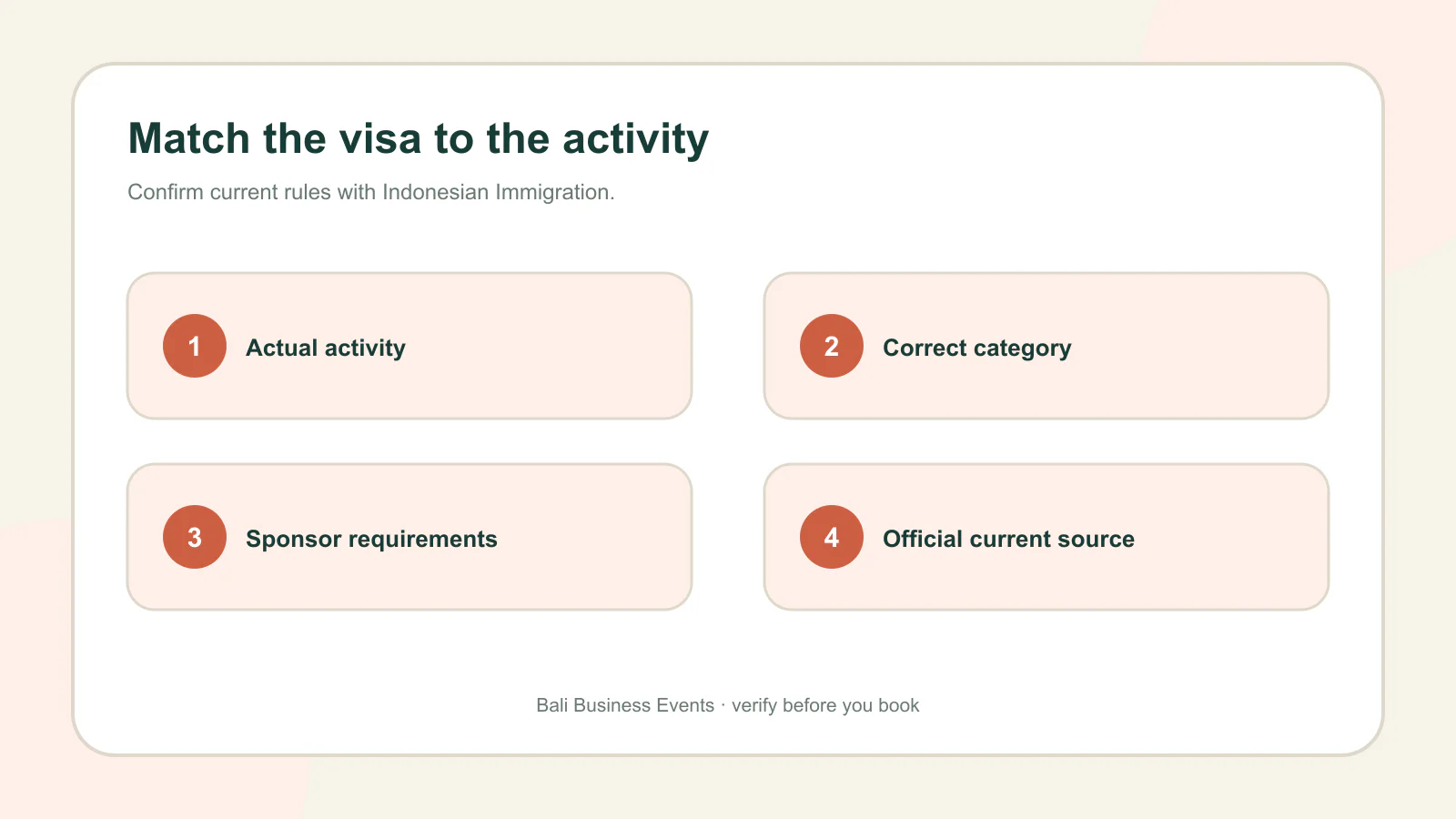
Match the activity, employer, payment source, and duration to the official category. A friendly nickname cannot expand the permission printed in the rules.
Bali visaE33Gremote workIndonesia business